
St-Gallen, Appenzell, ThurgauOn going
“AmiGo” – Autonomous ride-pooling in Eastern Switzerland
Autonomous electric on-demand mobility by PostBus, launching in Eastern Switzerland in 2027
Initiated-by Post AutoSwiss Association for Autonomous Mobility

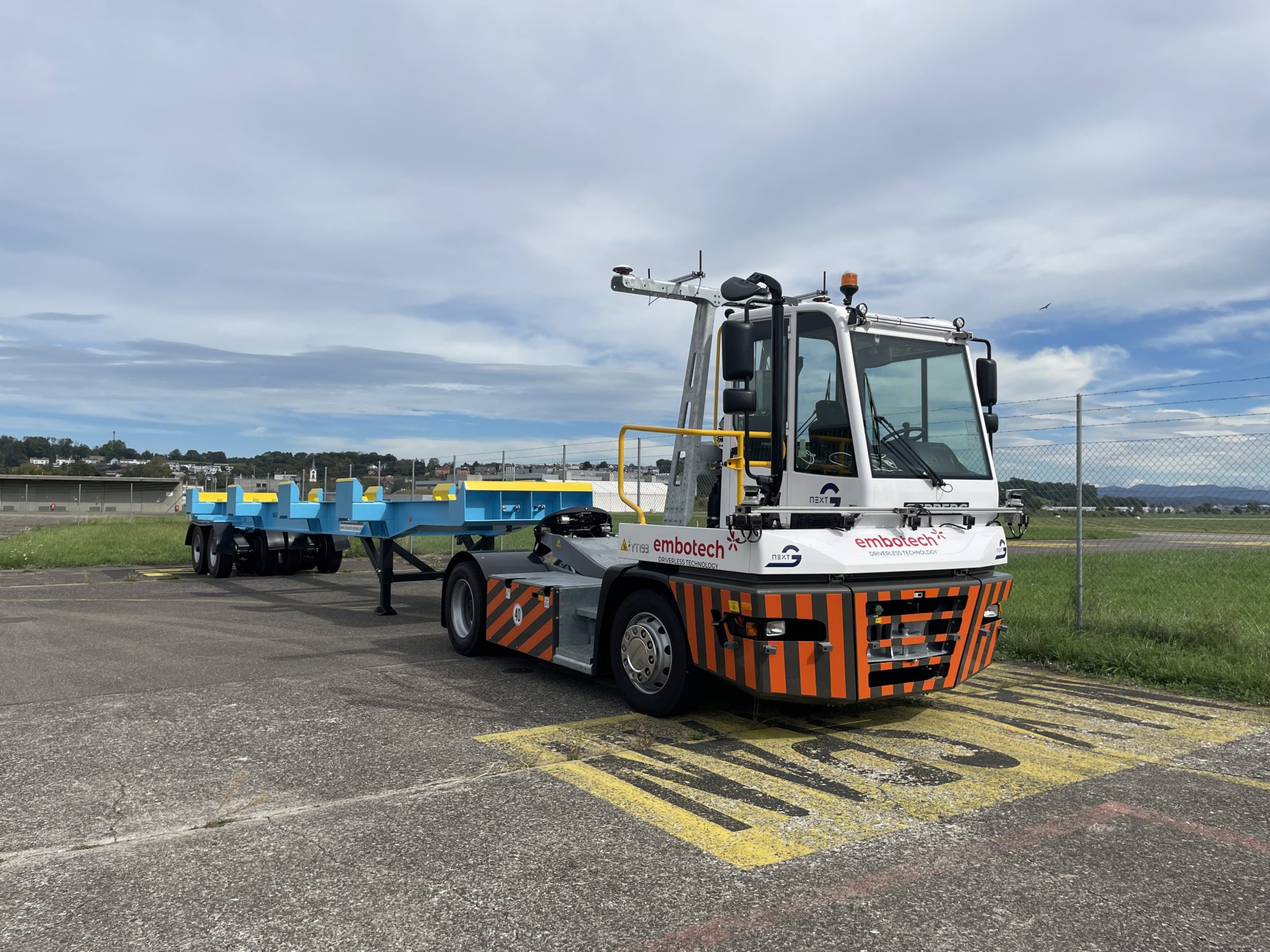
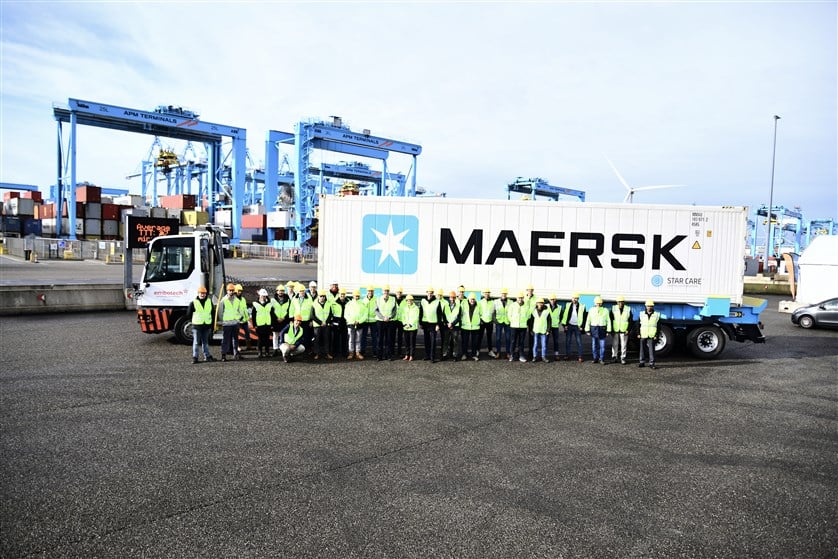
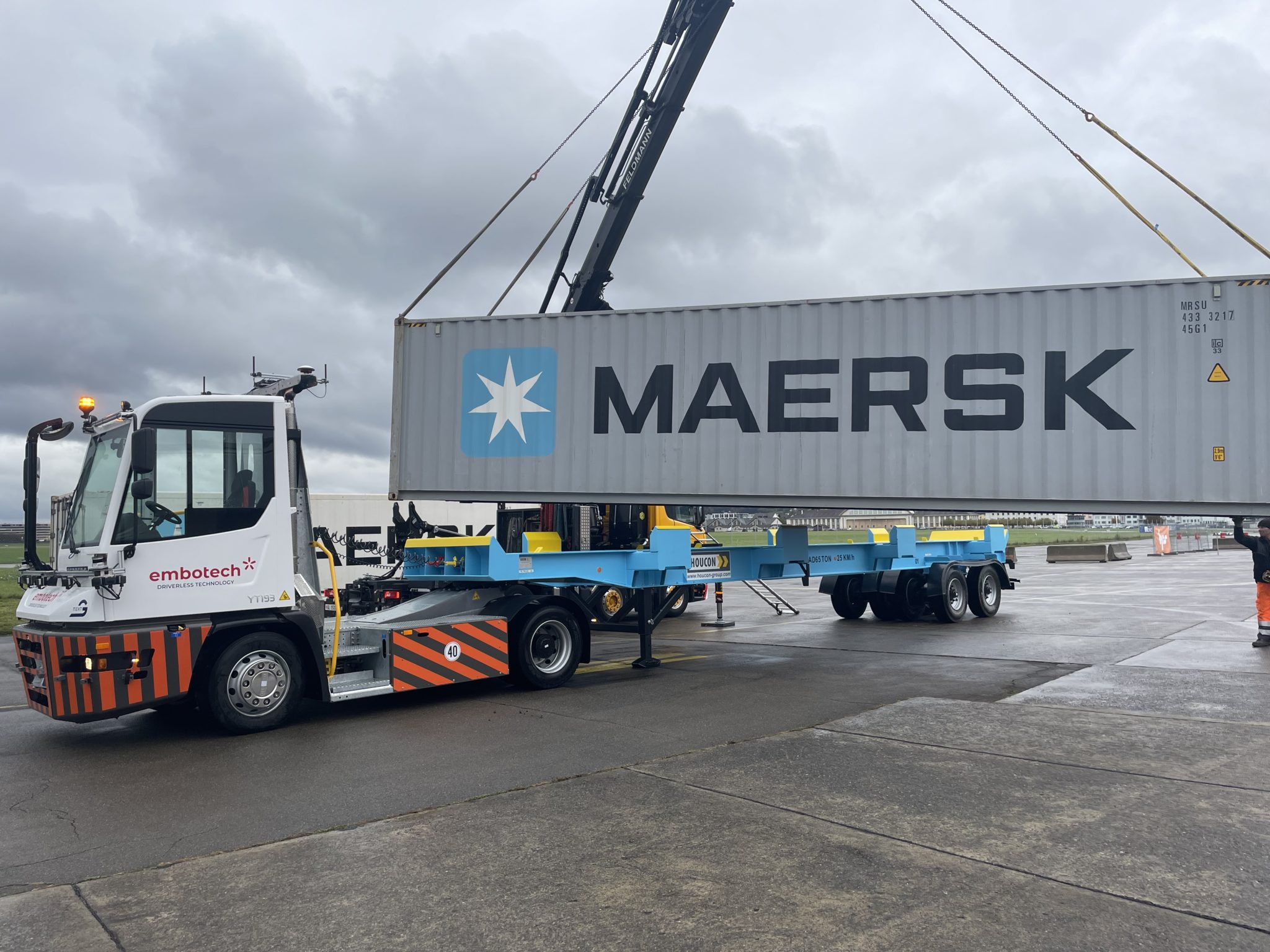
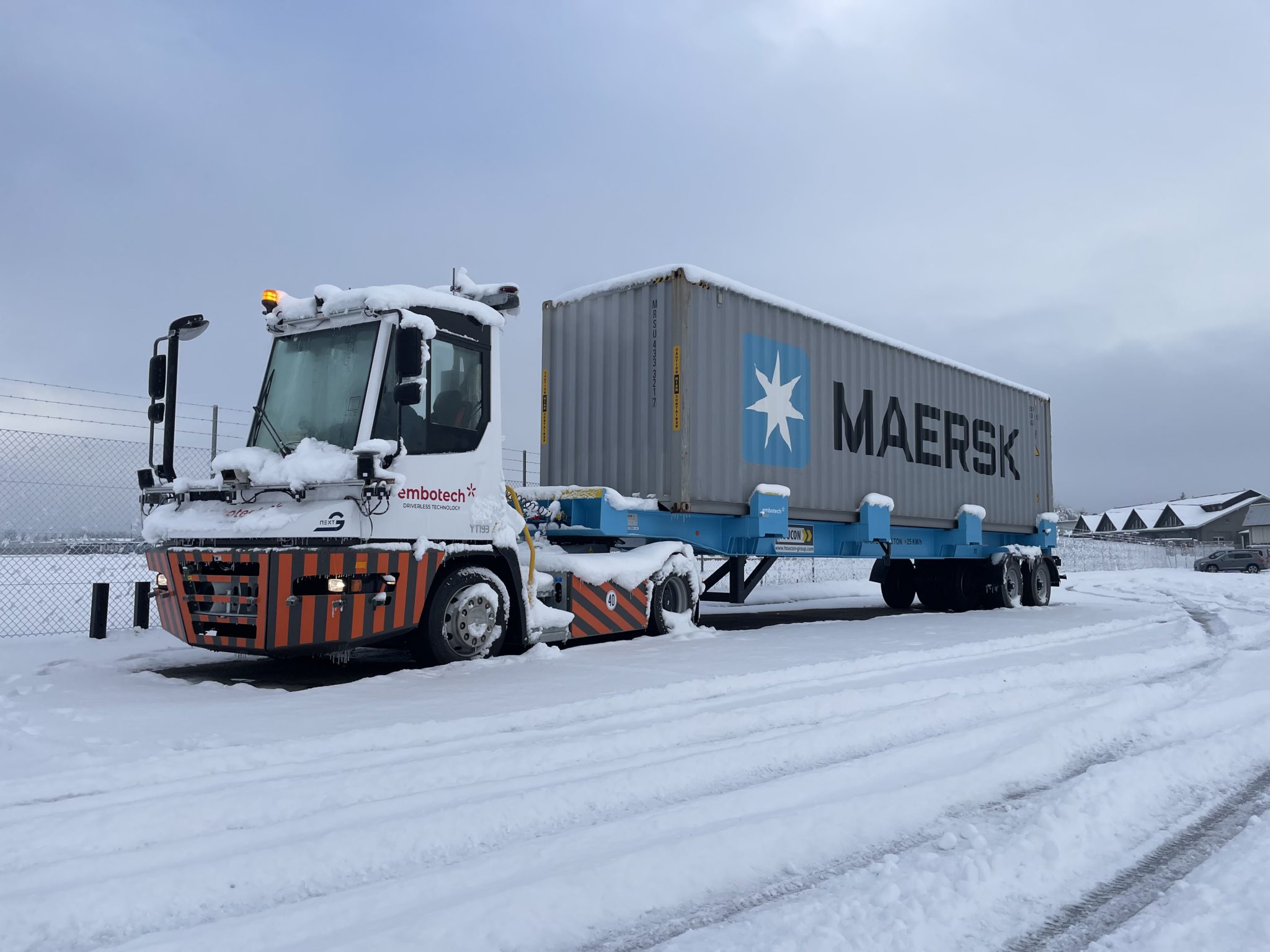
Developed by Embotech, the Embotruck is an automated terminal truck (ATT) designed to operate safely and efficiently within complex logistics operations. It enables Driverless Logistics by navigating mixed-traffic environments, adapting instantly to changing conditions, and maintaining reliable mission execution. As part of a broader shift toward Automation in container handling, the Embotruck demonstrates how advanced planning technology can significantly enhance productivity and operational resilience.

The Embotruck pilot project represents a major step toward the large-scale adoption of autonomous systems in container terminals. Ports are among the most demanding industrial environments, with constant movement of heavy machinery, limited space, and strict requirements for safety and timing. Terminal trucks play a central role in transporting containers between quay cranes, stack yards, and transfer points. Automating these movements offers the possibility of significantly improving predictability, operational flow, and safety.
The Embotruck is built on Embotech’s autonomy technology, which has been validated across several industrial deployments. Its objective is to contribute to the automation of container movement processes and support the transition toward more resilient and efficient port operations.
The Embotruck uses continuous motion planning to manage navigation, obstacle avoidance, and positioning. The planning engine updates trajectories in extremely short cycles, allowing the vehicle to respond immediately to pedestrians, forklifts, reach stackers, and other terminal vehicles. For a container terminal, this responsiveness is crucial. Movements often occur in confined spaces where small adjustments can prevent collisions or delays.
The vehicle is capable of performing the manoeuvres required for container logistics, such as aligning precisely with container handling equipment, reversing into designated loading or unloading zones, and navigating in mixed traffic. It must handle unpredictable behaviour from manually operated machinery and adapt its trajectory to maintain fluid traffic flow.
The ability to update trajectories frequently also allows the vehicle to navigate around containers, equipment, or unexpected obstacles without stopping the overall operation. This continuity is essential for maintaining productivity in environments where delays can quickly cascade into larger operational disruptions.
The project began with an extensive retrofitting and validation phase at a dedicated testing facility near Zurich. This isolated environment enabled Embotech’s engineers to verify the interface between the retrofitted drive-by-wire system, the autonomy software, and the remote supervision tools.
After demonstrating reliability in this controlled environment, the Embotruck entered the next stage of development by being transferred to a major European port for operational testing. Embotech is supporting APM Terminals in the rollout of thirty autonomous terminal tractors in Rotterdam. This initiative represents one of the most ambitious industrial autonomy projects underway in Europe. Operating in Rotterdam provides access to real workflows, real traffic, and true industrial weather conditions, making it an ideal location for validating the system.
Testing in Rotterdam examines how the Embotruck performs during routine operations as well as in exceptional situations. The vehicle must execute missions reliably, maintain timing with container handling equipment, and adjust its route based on changing terminal conditions. The system encounters manually driven terminal trucks, heavy machinery, container stack operations, and unpredictable movements of support vehicles.
Weather conditions typical for the North Sea, including fog, heavy rain, wind, and low visibility, provide opportunities to test the robustness of perception and planning under challenging circumstances. Real operational testing complements simulation tools, offering data on how the system behaves in scenarios that are difficult to reproduce artificially.
Operational evaluation also includes analysis of queueing behaviour, response to blocked paths, interaction with human drivers, and behaviour when loading areas suddenly become unavailable. These insights allow Embotech to refine the autonomy logic and ensure the vehicle behaves predictably in complex sequences.
The Embotruck’s autonomy stack is structured into two main components. The performance element is responsible for dynamic planning and driving decisions. The safety element supervises behaviour and ensures compliance with safety rules. This dual structure supports the stability required for industrial environments.
The system aligns with the updated European Machinery Regulation, which includes modern requirements for AI-supported machinery, cybersecurity, and digital operating documentation. Hazards must be mitigated at both software and system architecture levels, and the safety component ensures the autonomous truck adheres to these principles.
Remote supervision plays a significant role in the early stages of industrial deployment. Trained operators monitor the vehicle’s status through Embotech’s Fleet Management tools and can intervene when necessary. This supervisory structure ensures that operations remain safe and that any anomalies can be addressed quickly.
The Embotruck project benefits from Embotech’s wider experience with certified industrial autonomy at several operational sites. The underlying technology has already supported hundreds of thousands of autonomous movements and thousands of driverless hours across different industries. This foundation provides the maturity required for operating in the demanding environment of container terminals.
Although the Embotruck article does not repeat the automotive-focused key figures, the system is part of the same technological ecosystem that enabled Embotech to establish reliable, high-volume autonomous operations. This background is essential for a port environment that relies heavily on timing and precision.
The ongoing operations in Rotterdam represent a significant step toward the future of automated port logistics. The insights gained from this pilot will guide development and determine how autonomous terminal trucks can scale across larger areas of port activity. By operating in the middle of active traffic, continuously changing container flows, and complex manoeuvring environments, the Embotruck is demonstrating the capabilities required to support safer, more predictable, and more efficient logistics.
Through this project, Embotech is exploring how autonomy can relieve bottlenecks, reduce operational variability, and support long-term investment in automated infrastructure. The Embotruck pilot reflects an important shift in industrial transportation and highlights the potential of advanced autonomy to redefine the way container terminals manage movement and operations.
Autonomous electric on-demand mobility by PostBus, launching in Eastern Switzerland in 2027
Initiated-by Post Auto
European project developing a framework to connect and orchestrate all modes of mobility.
Initiated-by Horizon Europe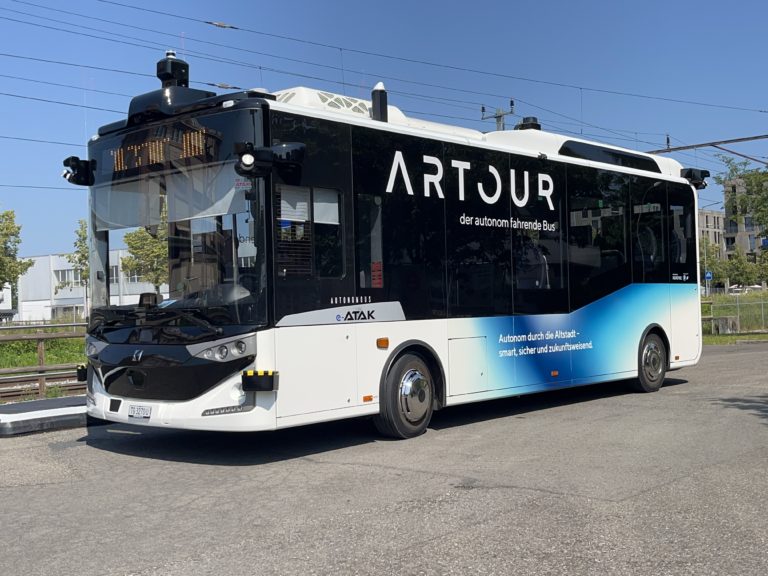
Automated full-size electric bus on a licensed line in Arbon’s old town, a pilot project led by the TGA.
Initiated-by TGA Arbon
CCAM-ERAS drives the socio-economic transition to connected, cooperative, automated mobility.
Initiated-by European Union
Swiss Furttal Pilot Project tests automated vehicles to enhance public transit with on-demand local transport options
Initiated-by Canton of Zurich